Skip to Content

The Fly Fisher's Companion

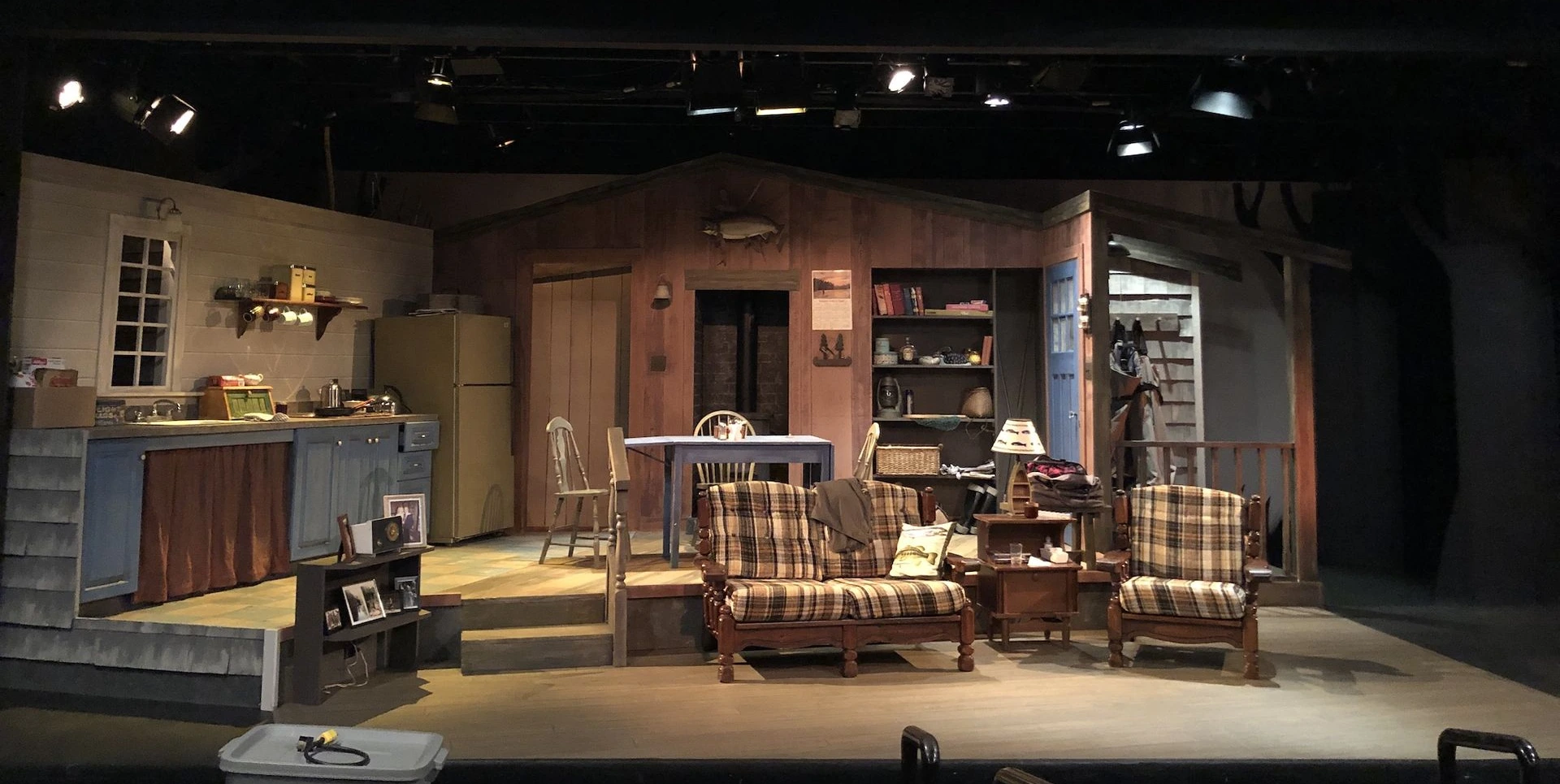
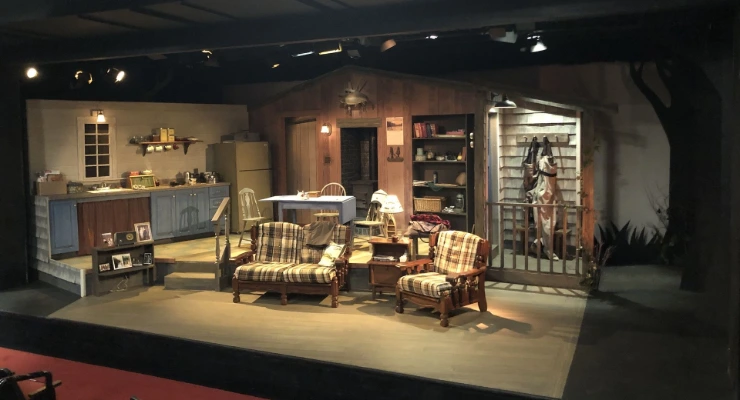
Set design, build and paint for the opening play of the 70th season at The Curtain Club in Richmond Hill

More detail about the design and build process for this set.

Design and Modelling


After creating several different designs as sketches on paper, I began making a white model of my chosen design.

This was refined based on feedback from the director, cast and other members of the production team. Areas that were changed included the fireplace, the upstage wall and the layout and height of the riser. At this stage, it’s easy to check whether the design works in 3D space and make changes before committing to the design.
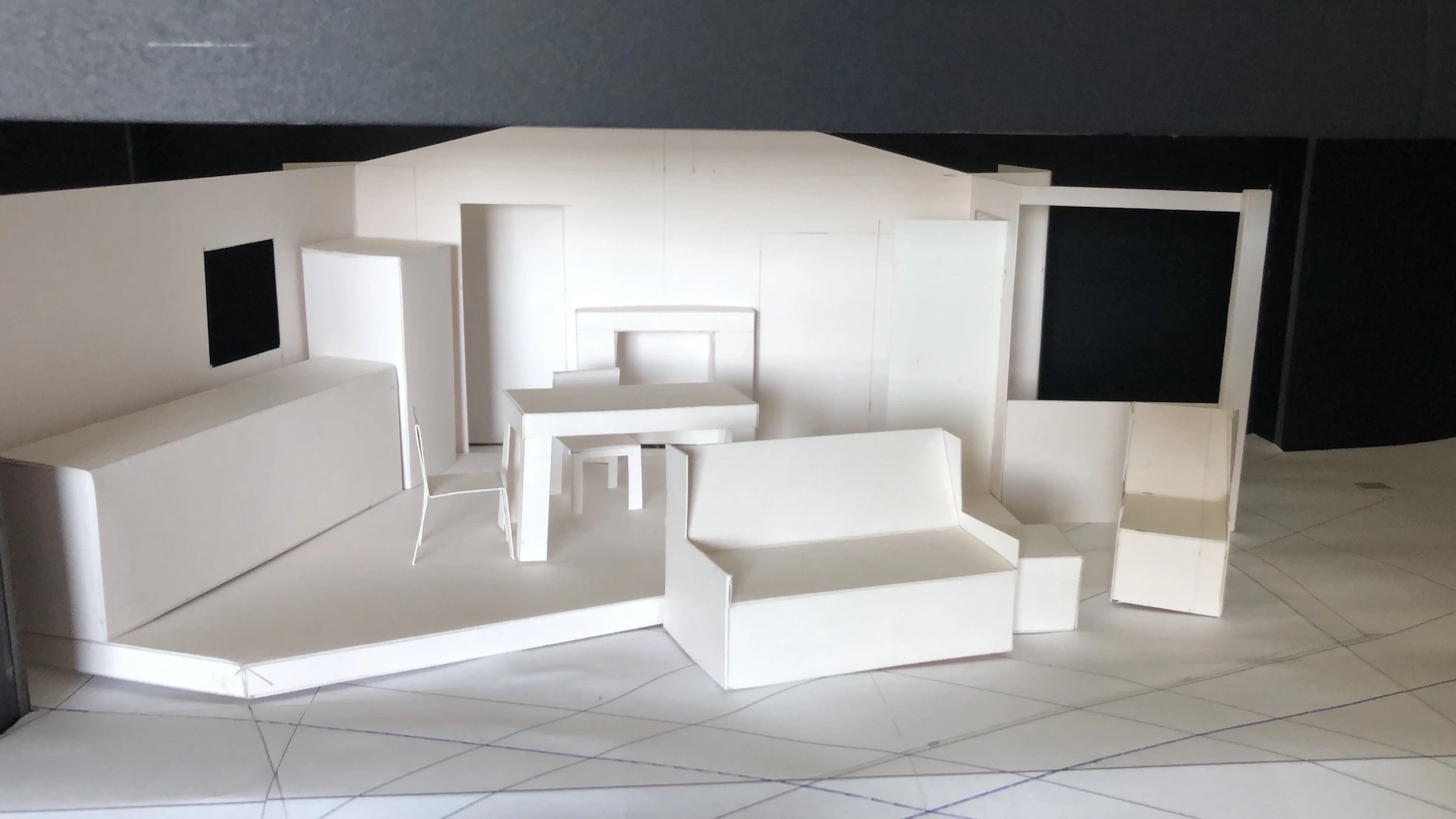
Once the white model was made, I began working on a presentation model. Some of the furniture I was going to use was from the theatre’s stock, so I measured it to model it in 1/2 inch : 1 foot scale.
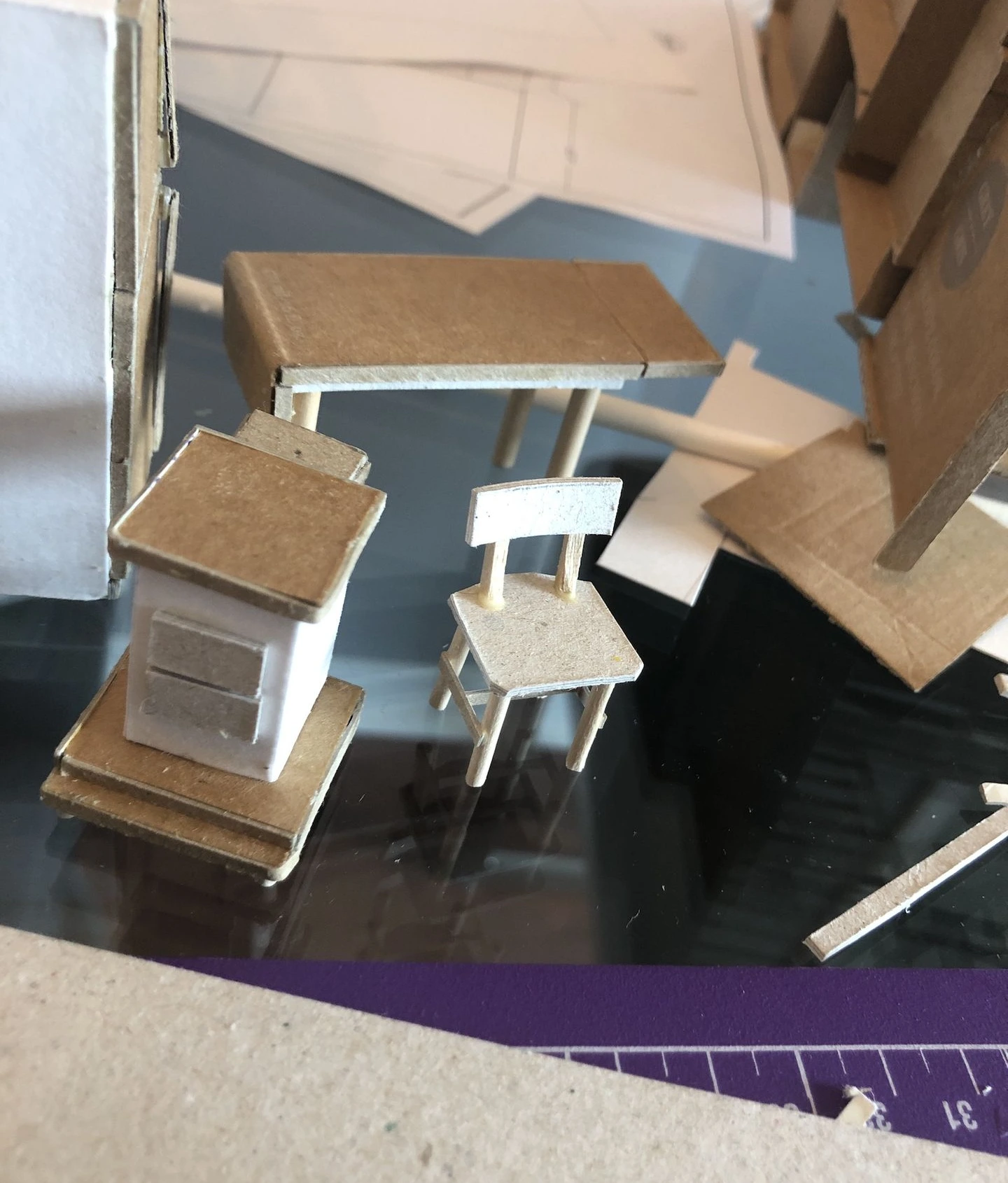
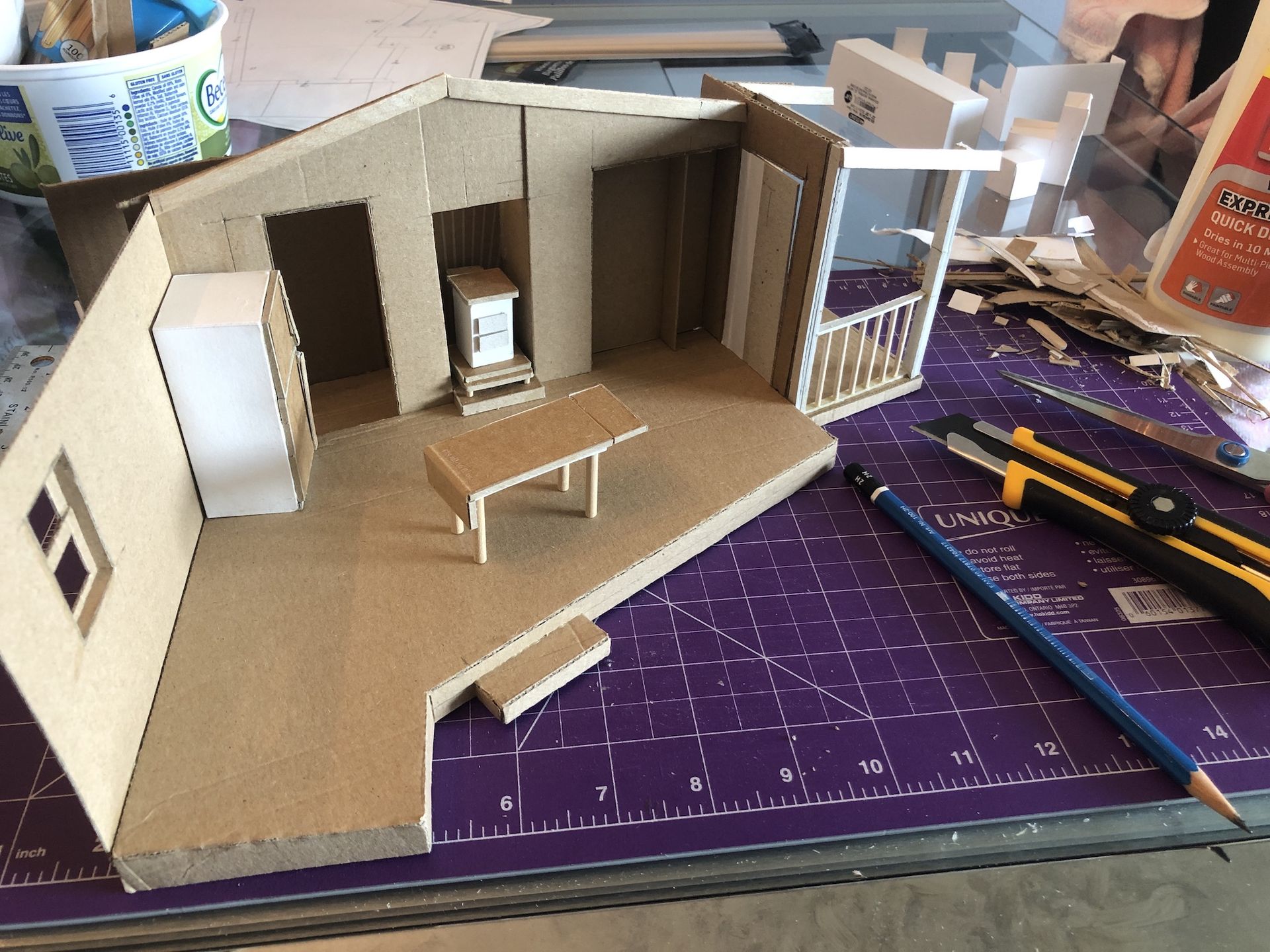
The presentation model taking shape. This mainly used cardboard and small wooden pieces such as dowels and popsicle sticks.
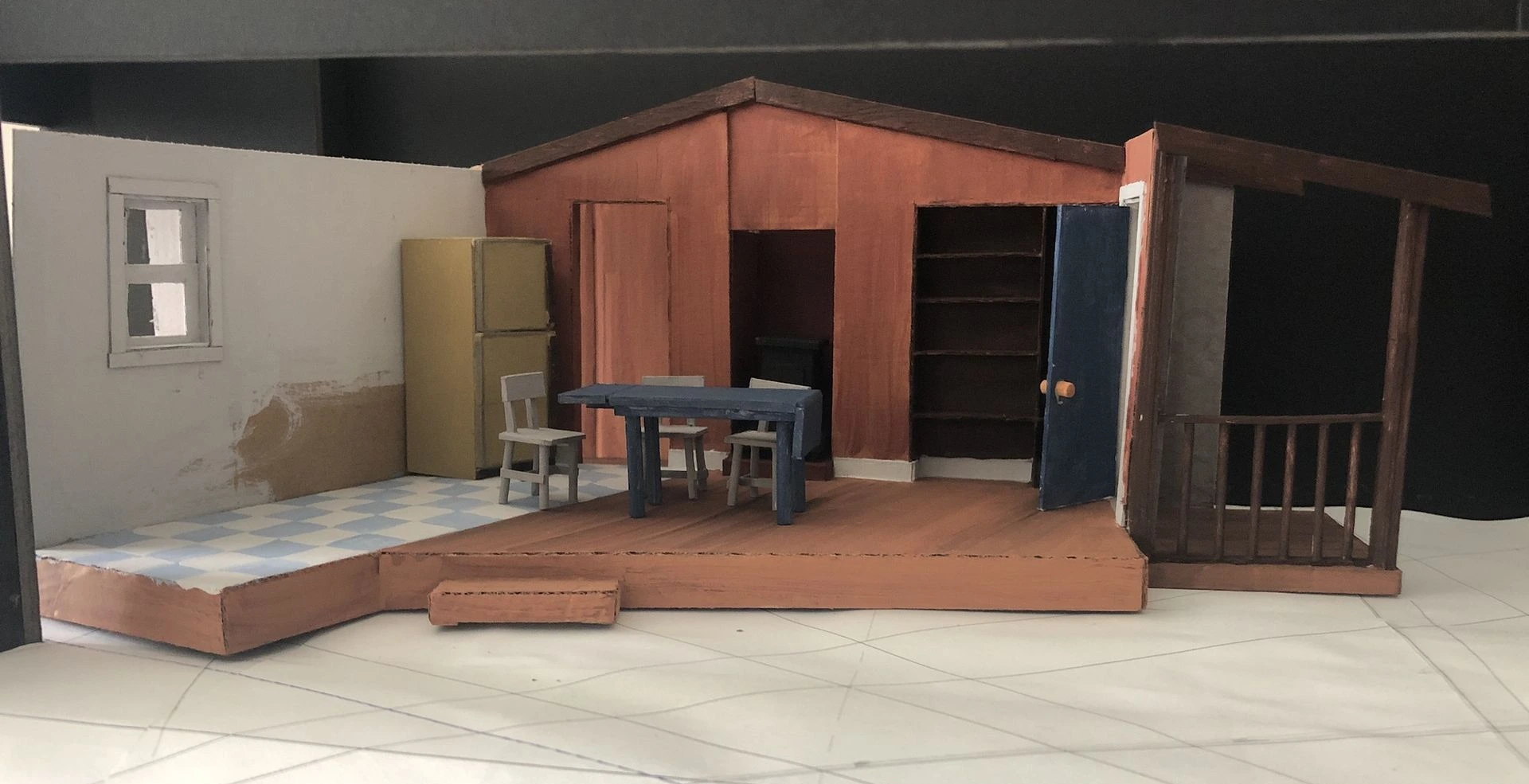
The model receives its first coats of acrylic paint.
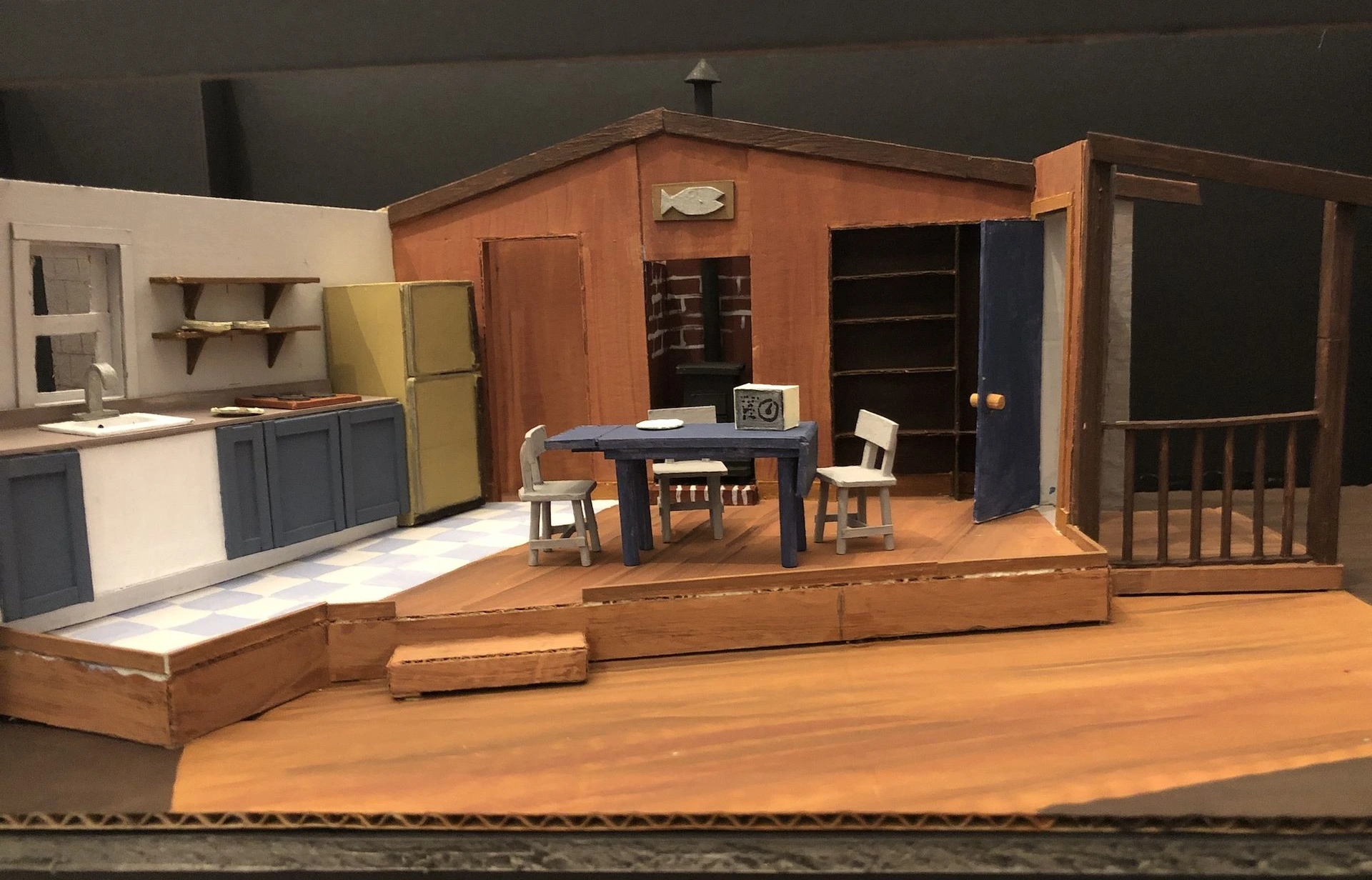
Further details have been added to the model, and it’s been attached to a piece of card to represent the stage floor. At this point, everything is painted in the approximate colours that will be used, so the lighting designer can have a sense of what the set will look like when built and painted.
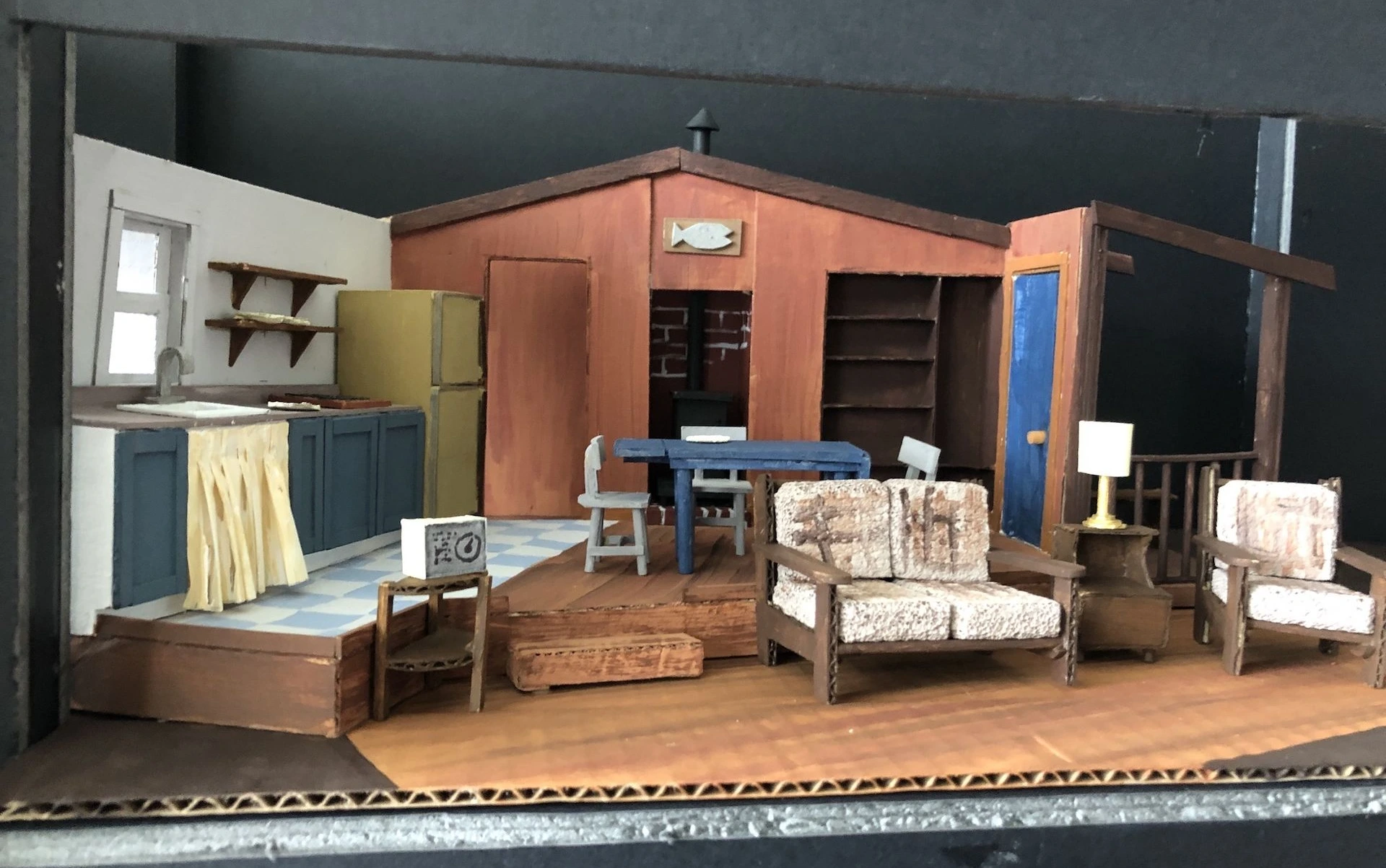
The completed model. Sofa cushions were made from painted foam and the sink curtain was painted plastic sheet. Some very small details like set dressing were not modelled as the exact items to be used would be decided later.
Build


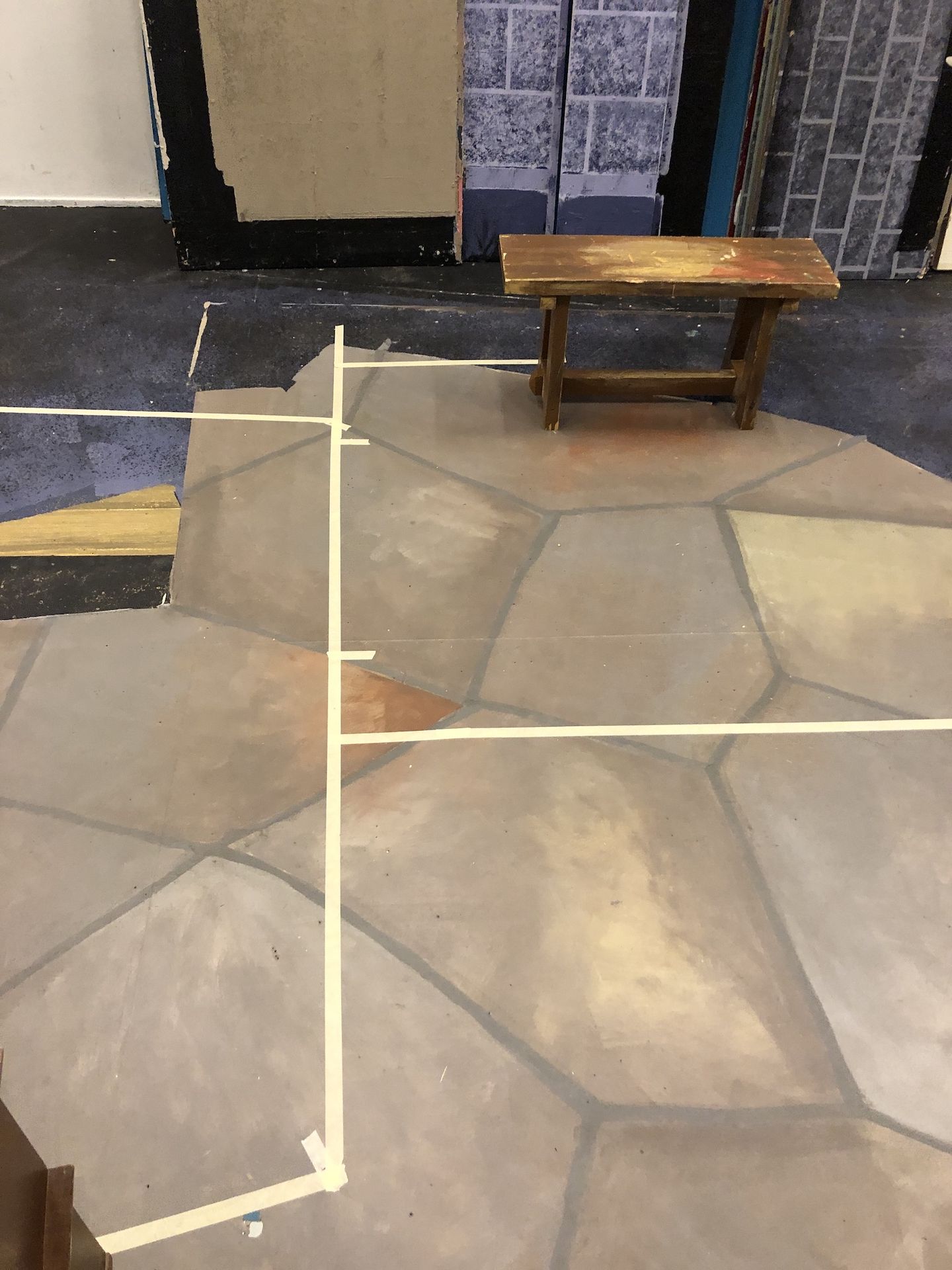
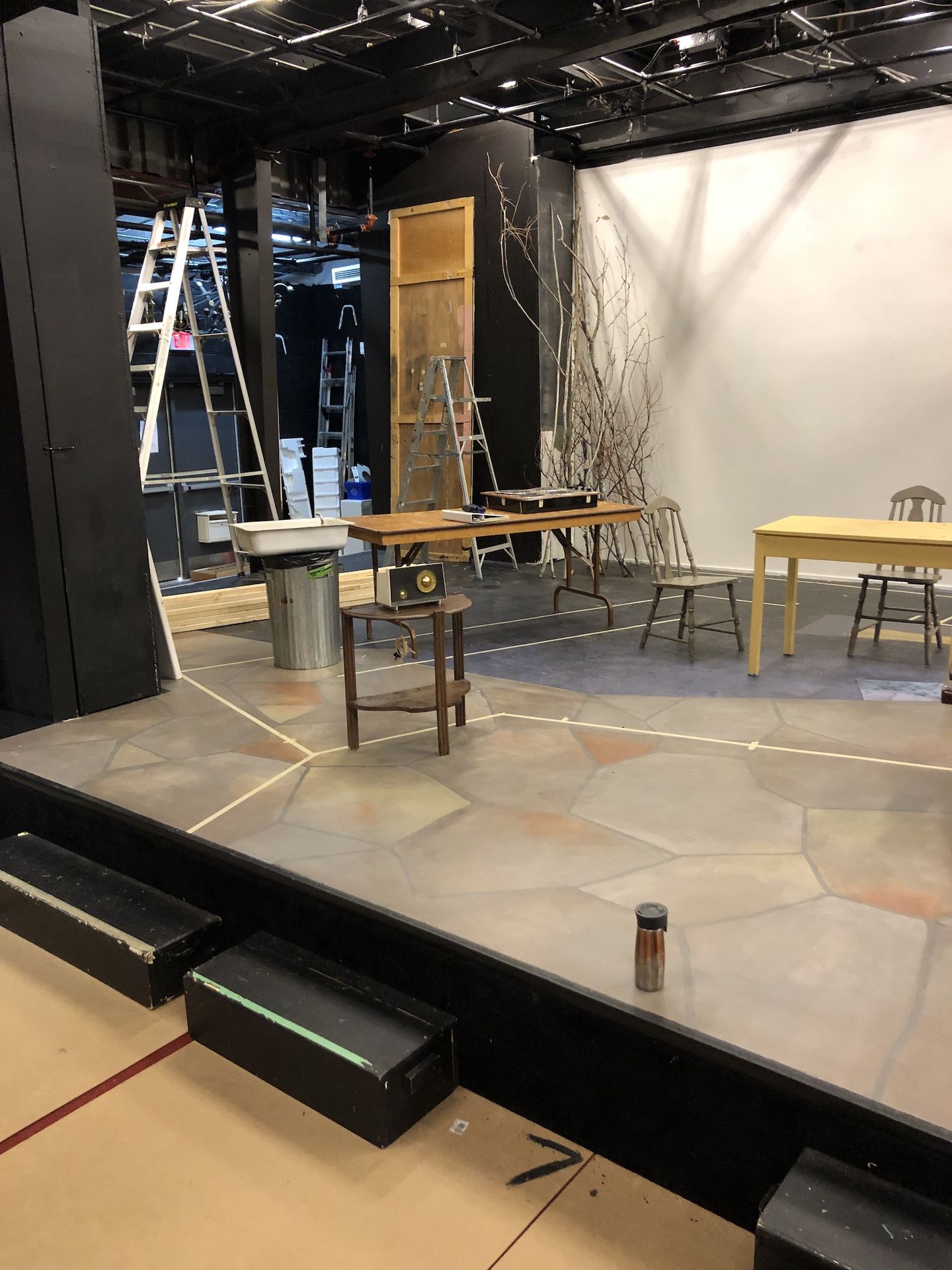
The previous set, from Jonas and Barry in the Home  was taken down and the layout of the new set market on the stage floor with tape. Rehearsal furniture was used in place of the kitchen before the set was built.


Tape was used to mark the location of the door and the porch riser.

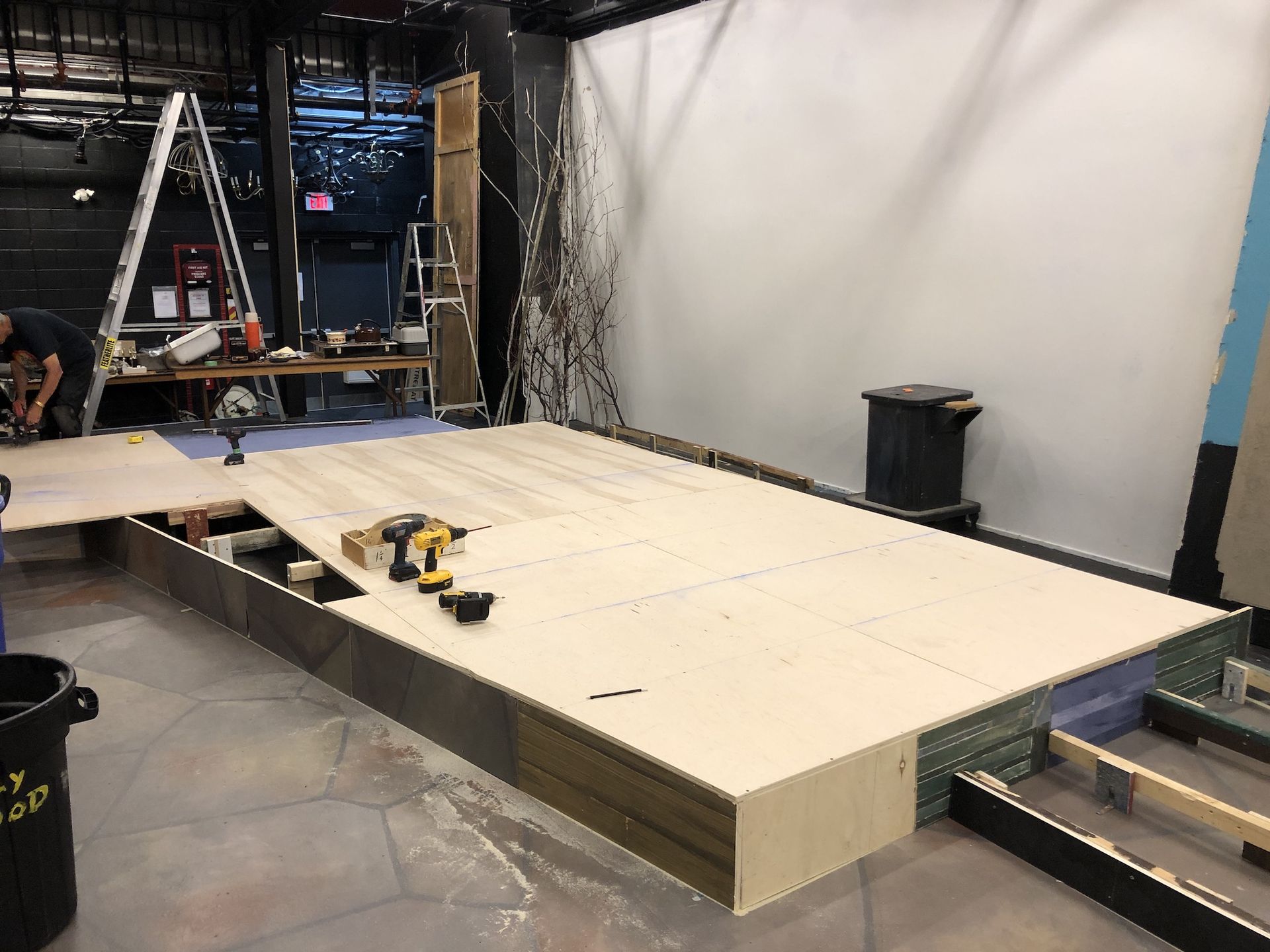
The risers were constructed on day 1 of the set build.

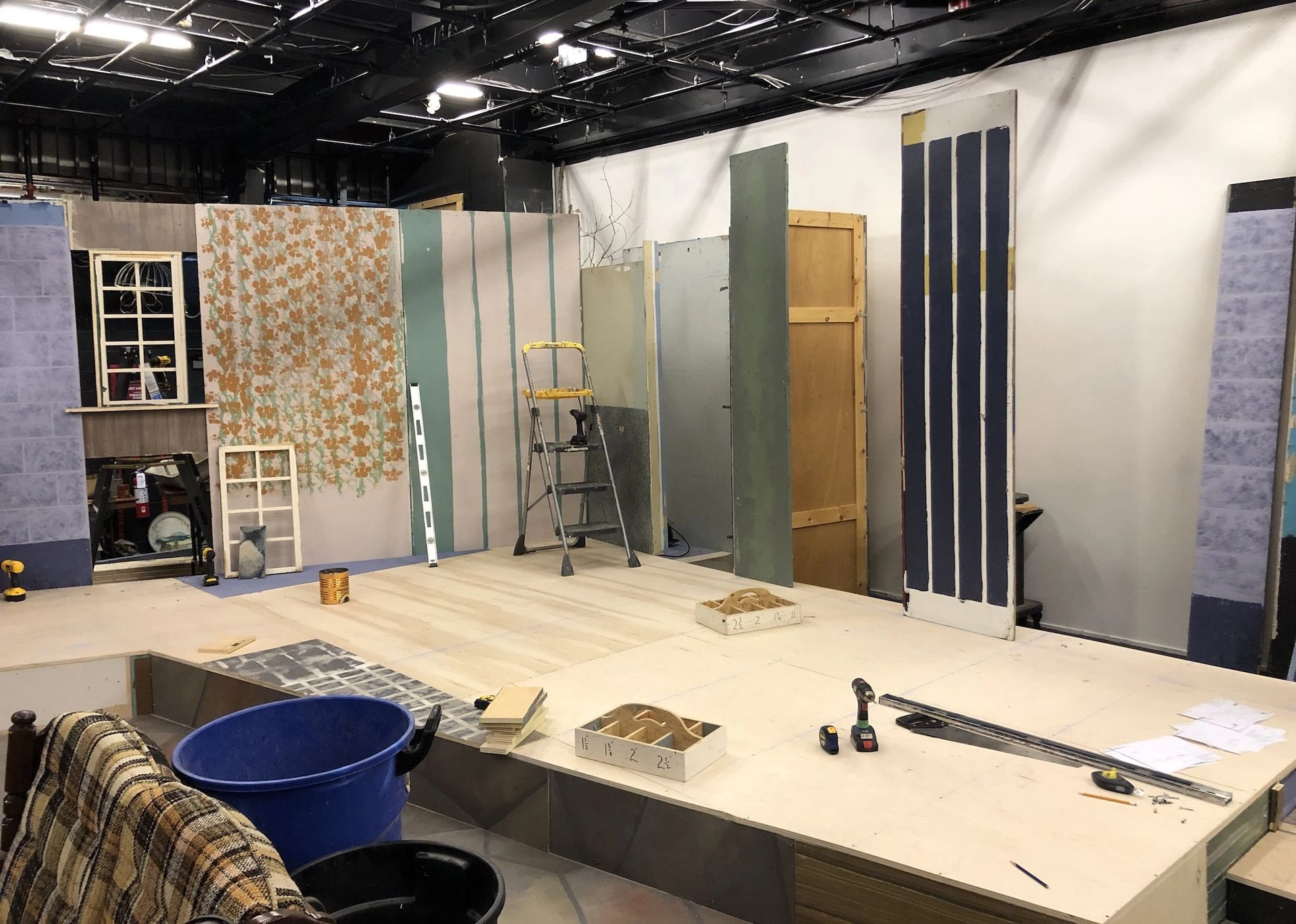
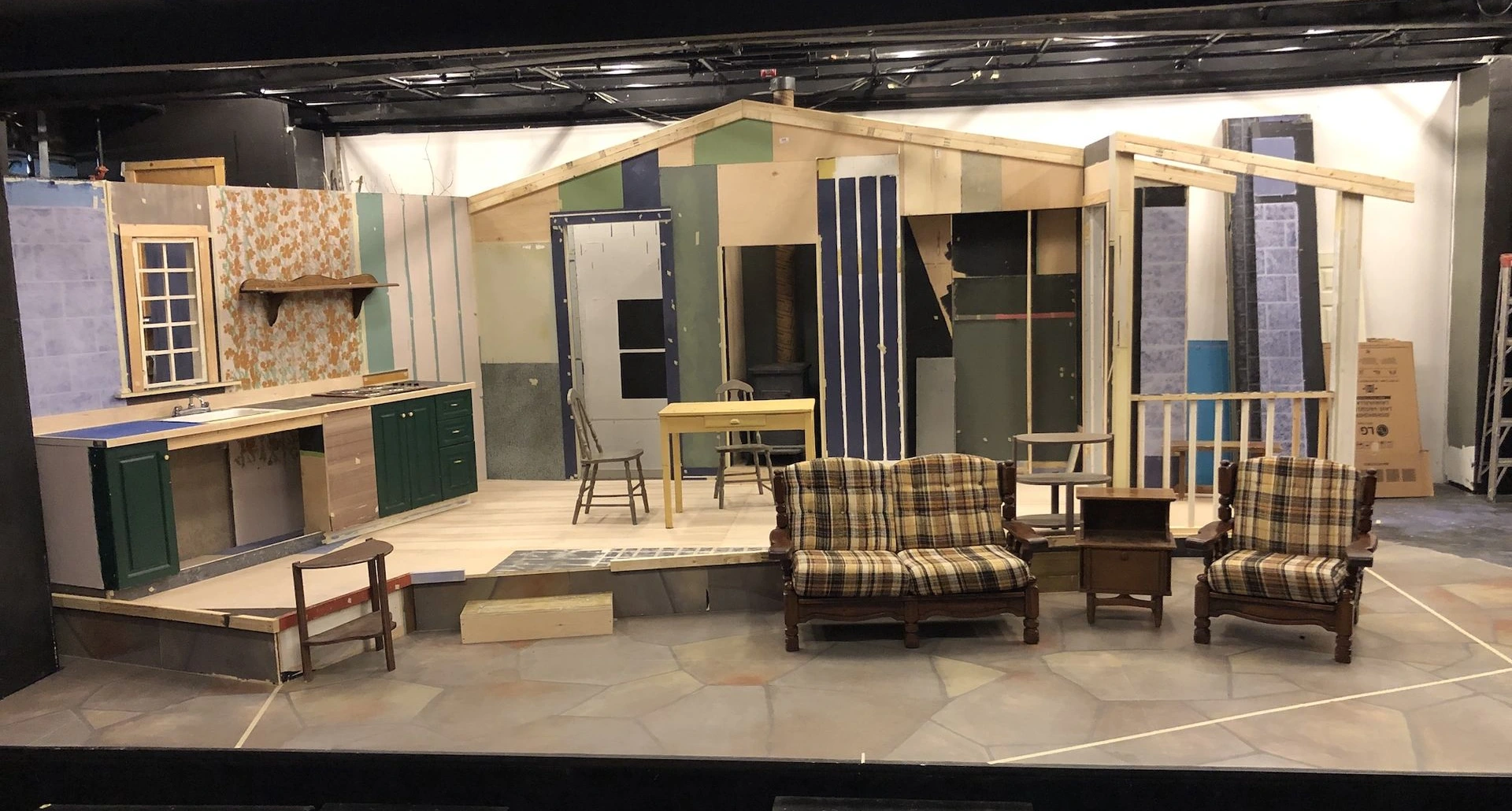
The kitchen wall is built and the back wall is under construction. The flats were only 8 ft tall, to give the cabin the feeling of a small building. They were supported on 6 inch supports, and fixed to the rear of the 12 inch high platform, giving a finished wall height of 7 1/2 ft.

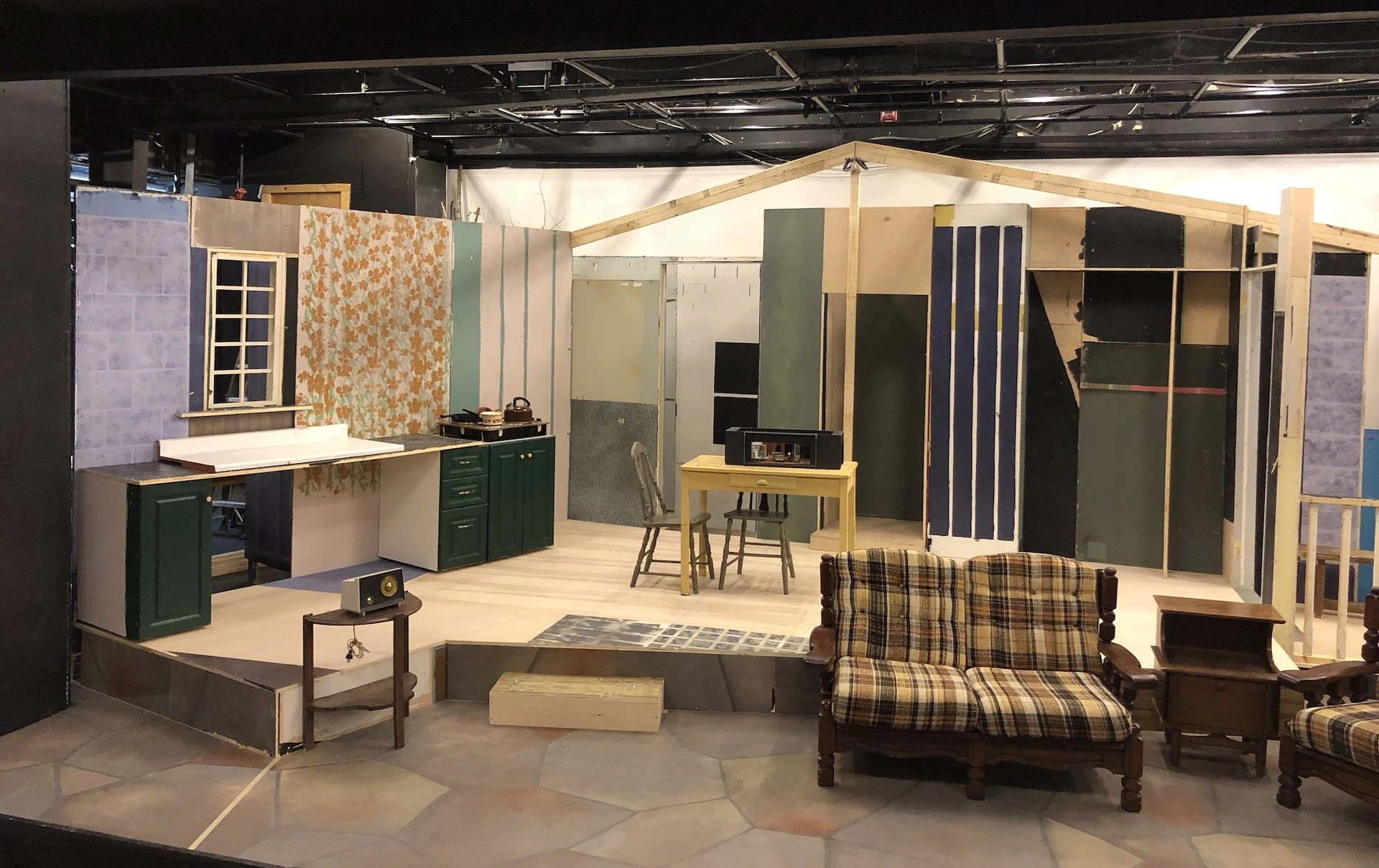
The kitchen is being constructed from stock cabinets, and the roof beam is in place.

After only around 4 days of building, the construction of the set is largely complete.

Scenic Painting


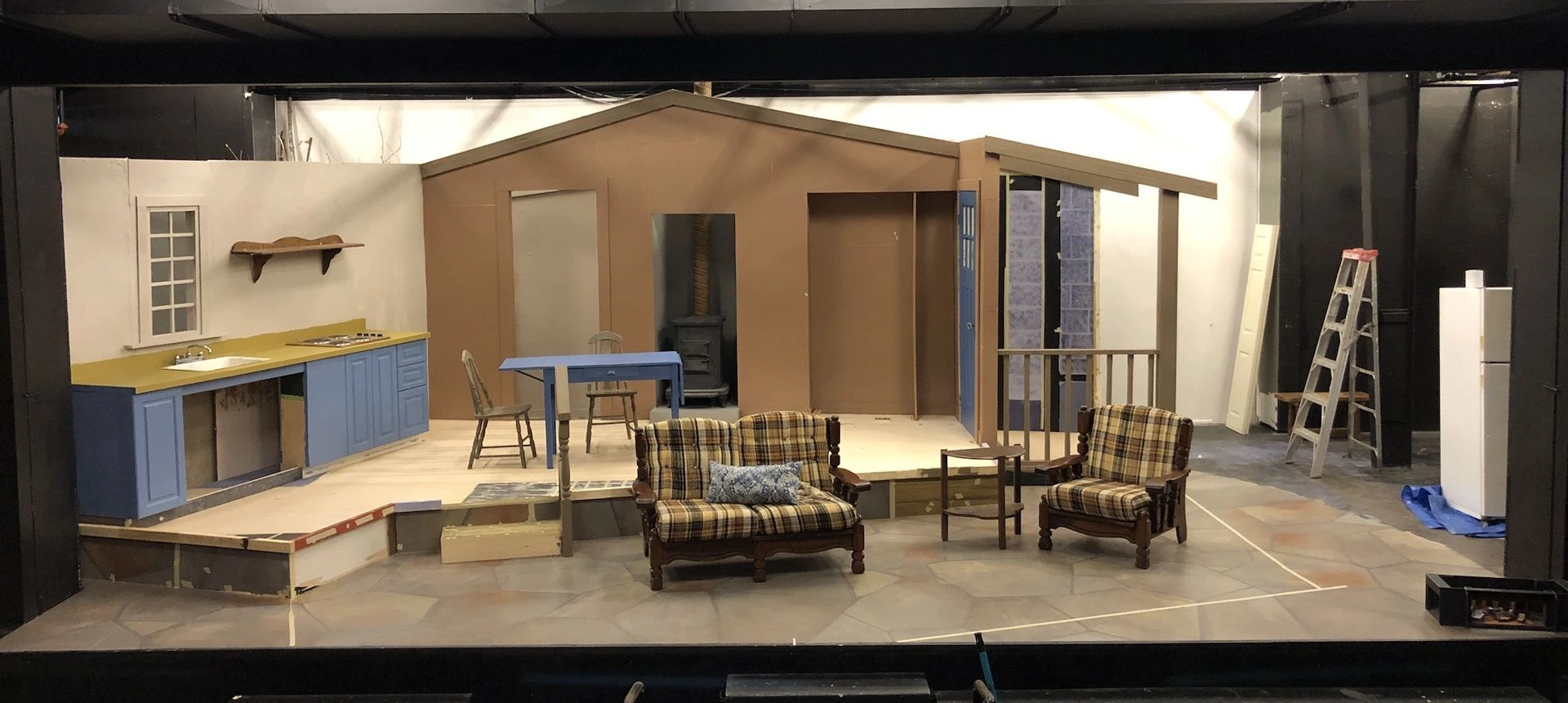
A base coat of plaint has been applied to the walls of the set and the kitchen. The wall outside the door was extended to provide more space for costumes (fishing waders) to be hung from hooks, and a railing was added on the steps down from the main riser for safety.

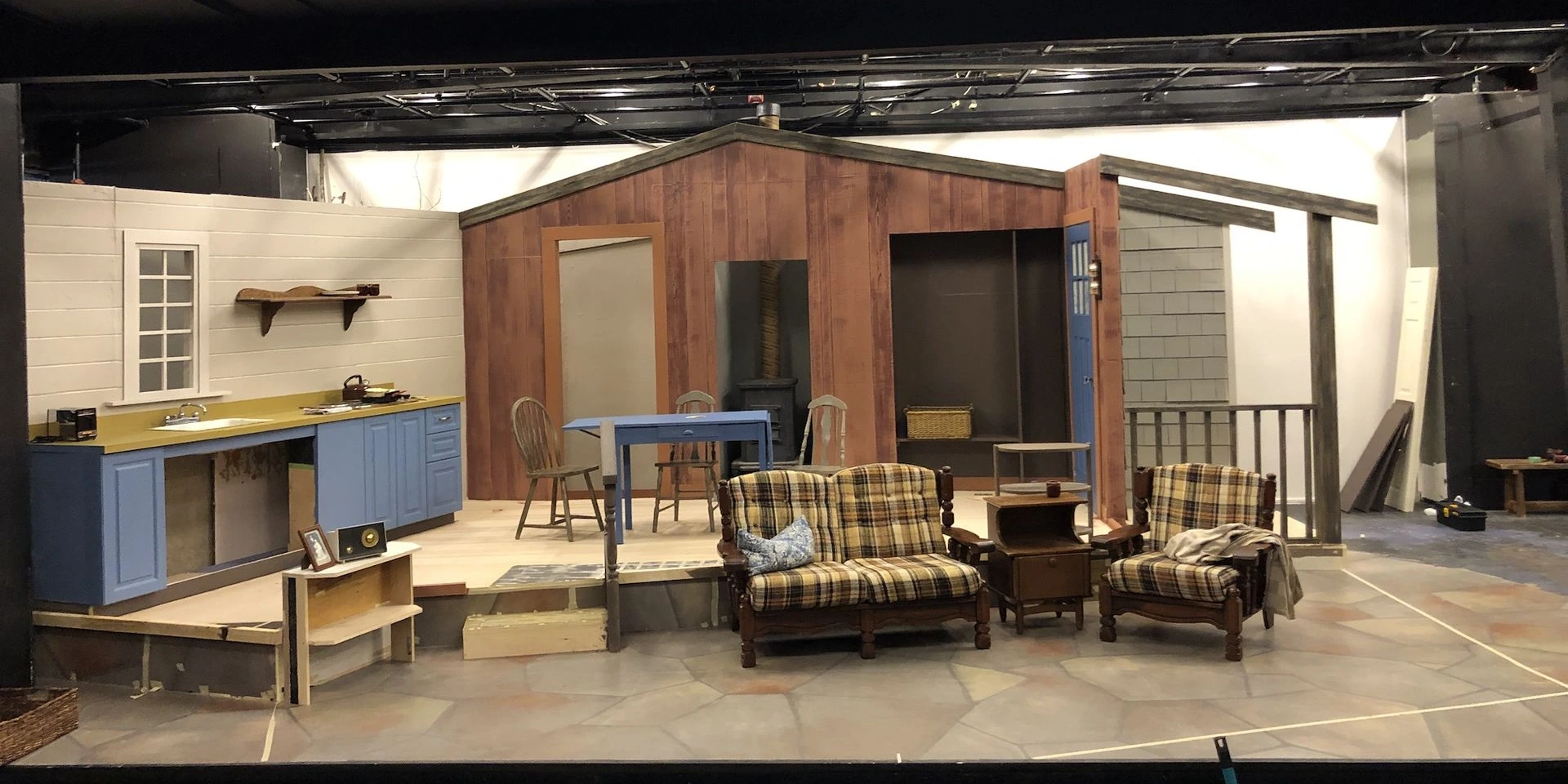
Scenic paint finishes are being applied to give the appearance of boards on the kitchen wall and wood paneling on the back wall. The cedar shakes were made from corrugated cardboard stapled to the flats and then painted.

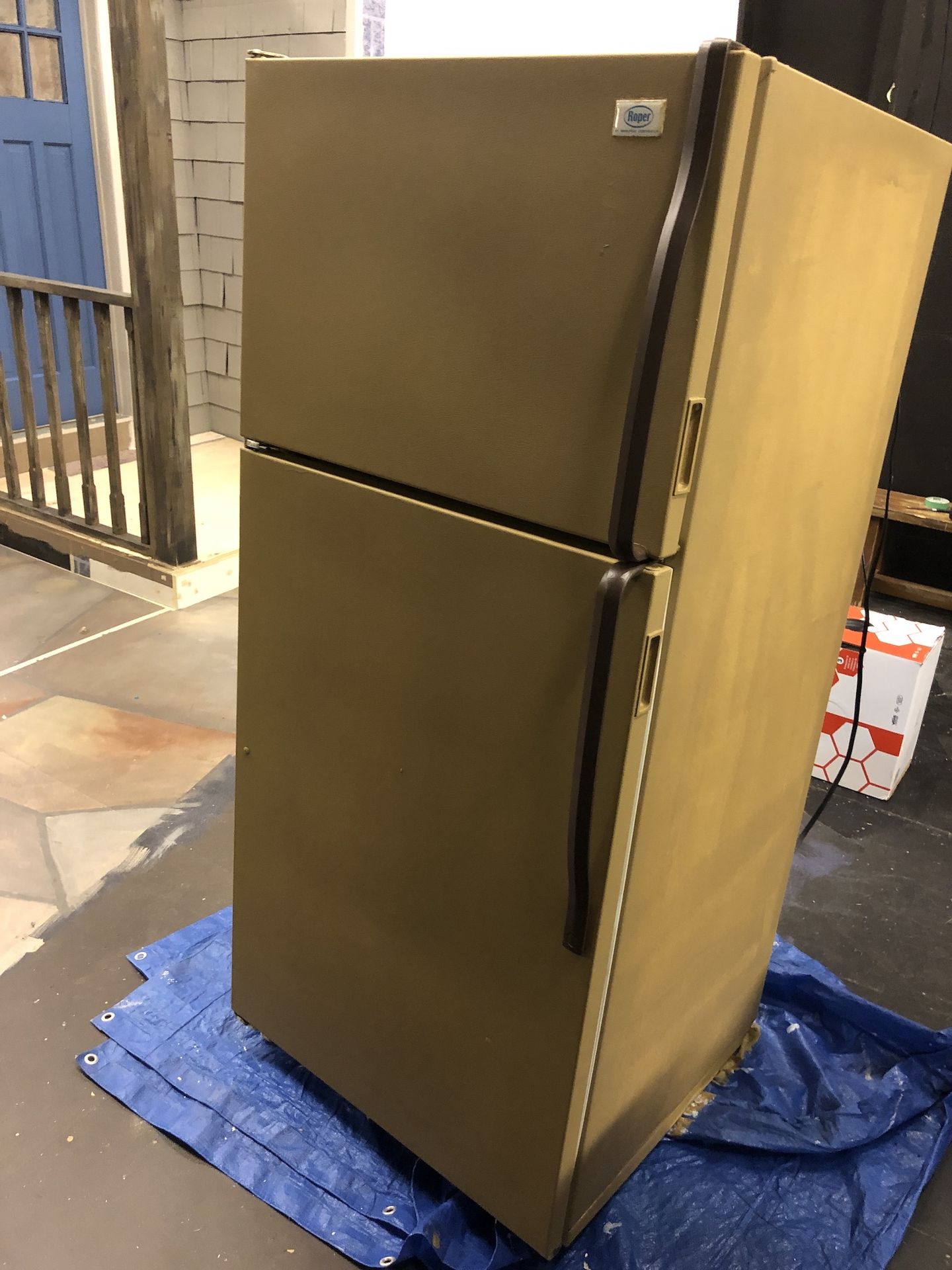
The set needed an old fridge, but we couldn’t find the real thing, so a white fridge was donated by a nearby appliance store. I painted it with primer and then latex paint to give it a suitably retro look.

Painting continues, including changing the colour of the kitchen counter as it was too close to the colour of the fridge. A purple was used, with sponging to give the appearance of a melamine “granite” effect.

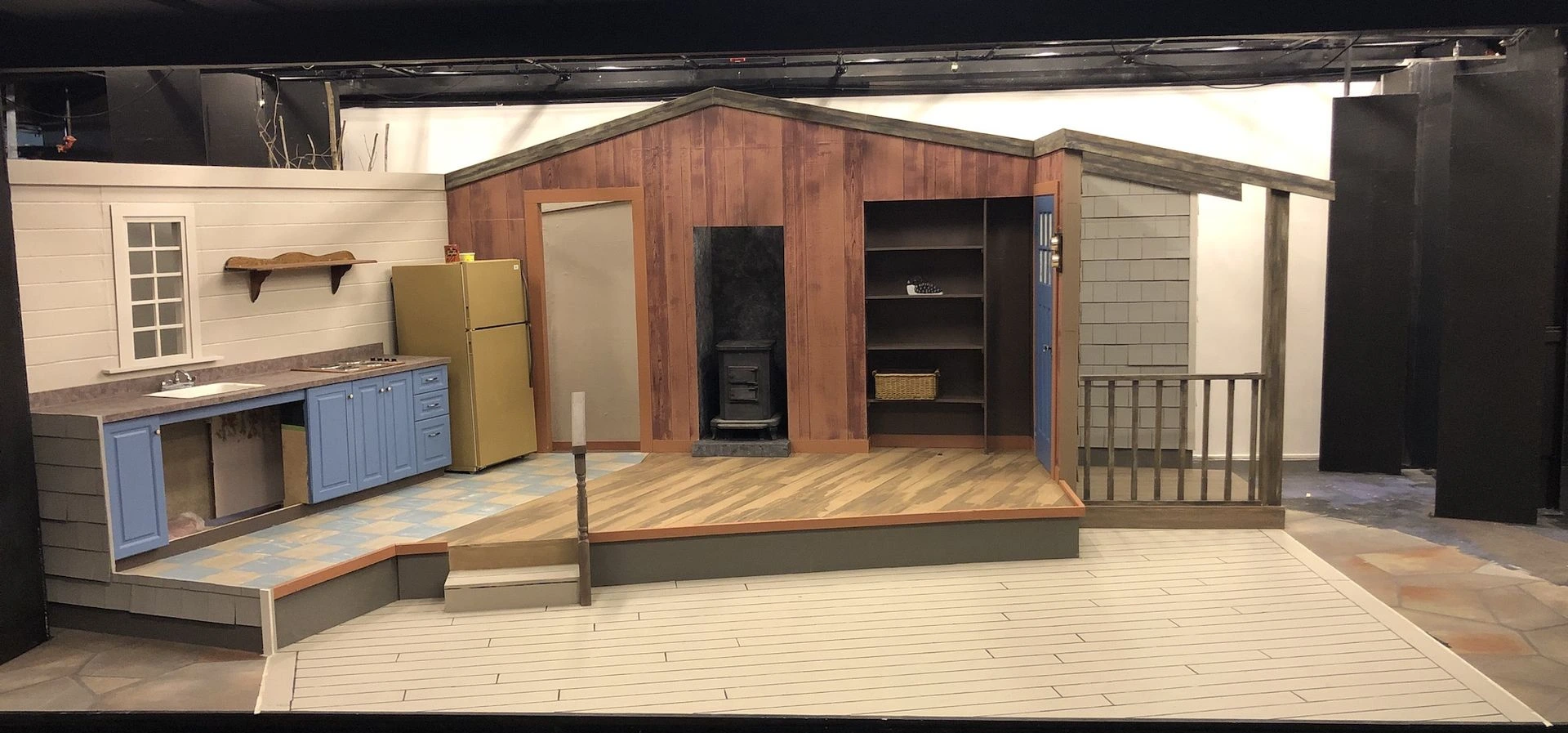
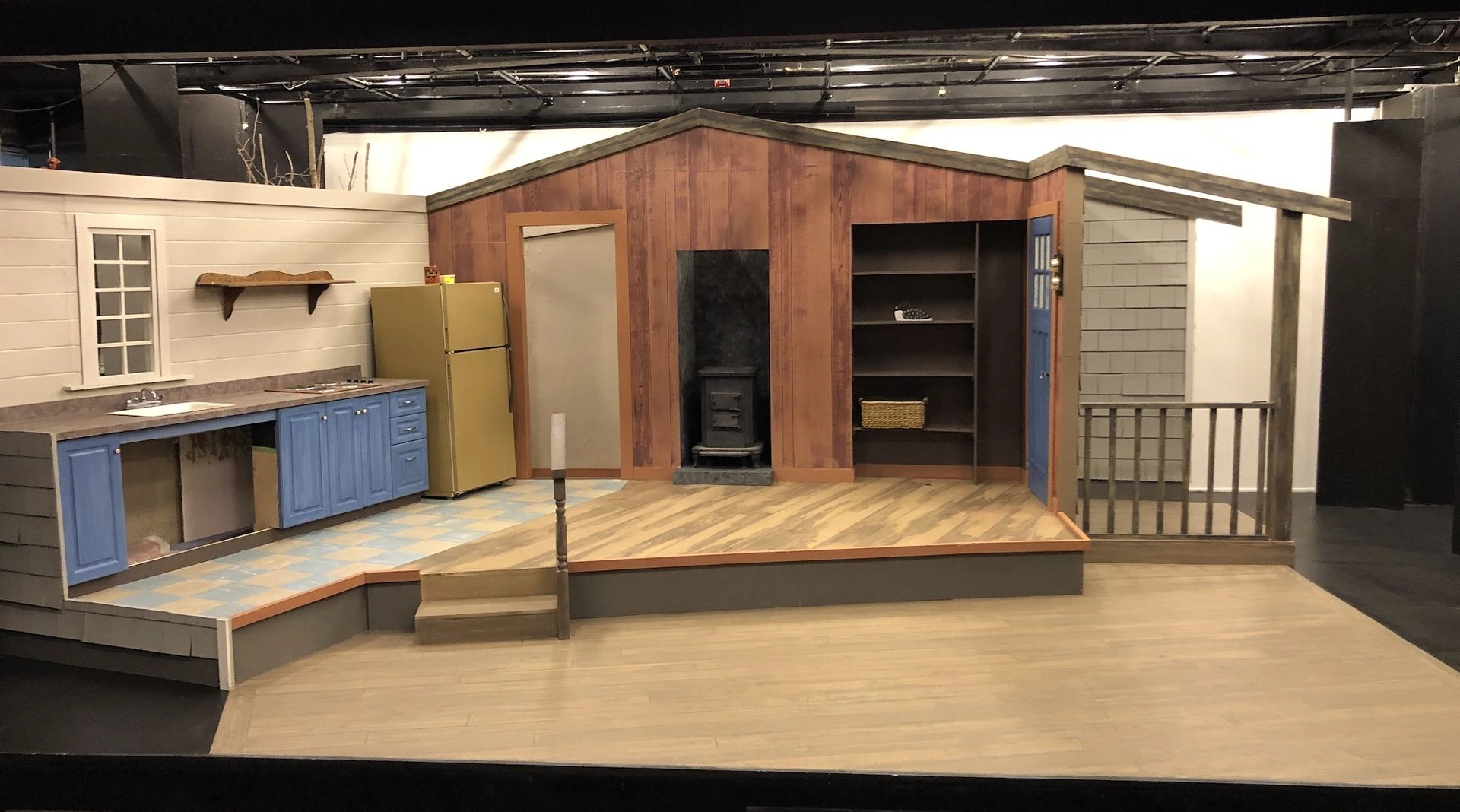
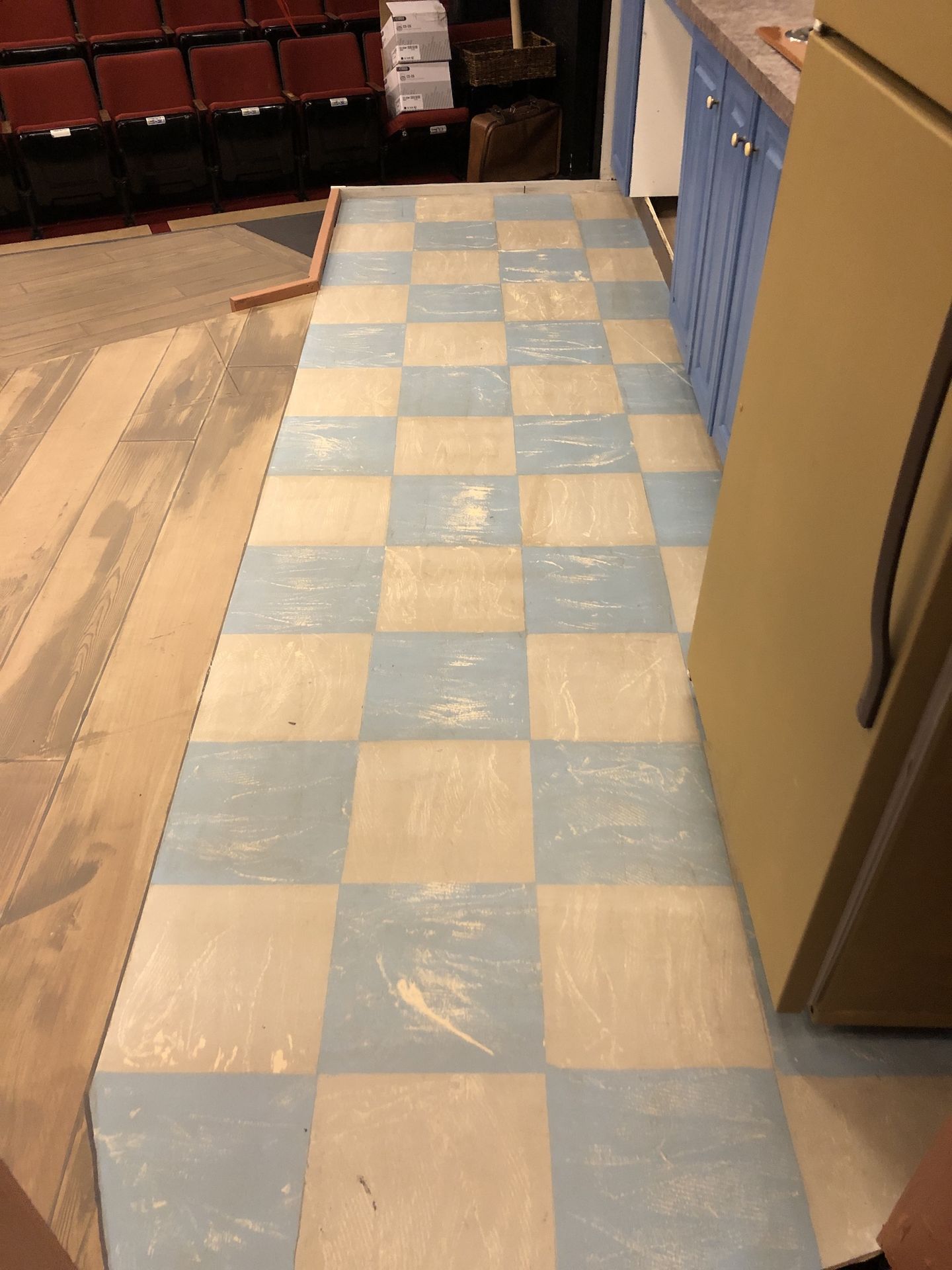
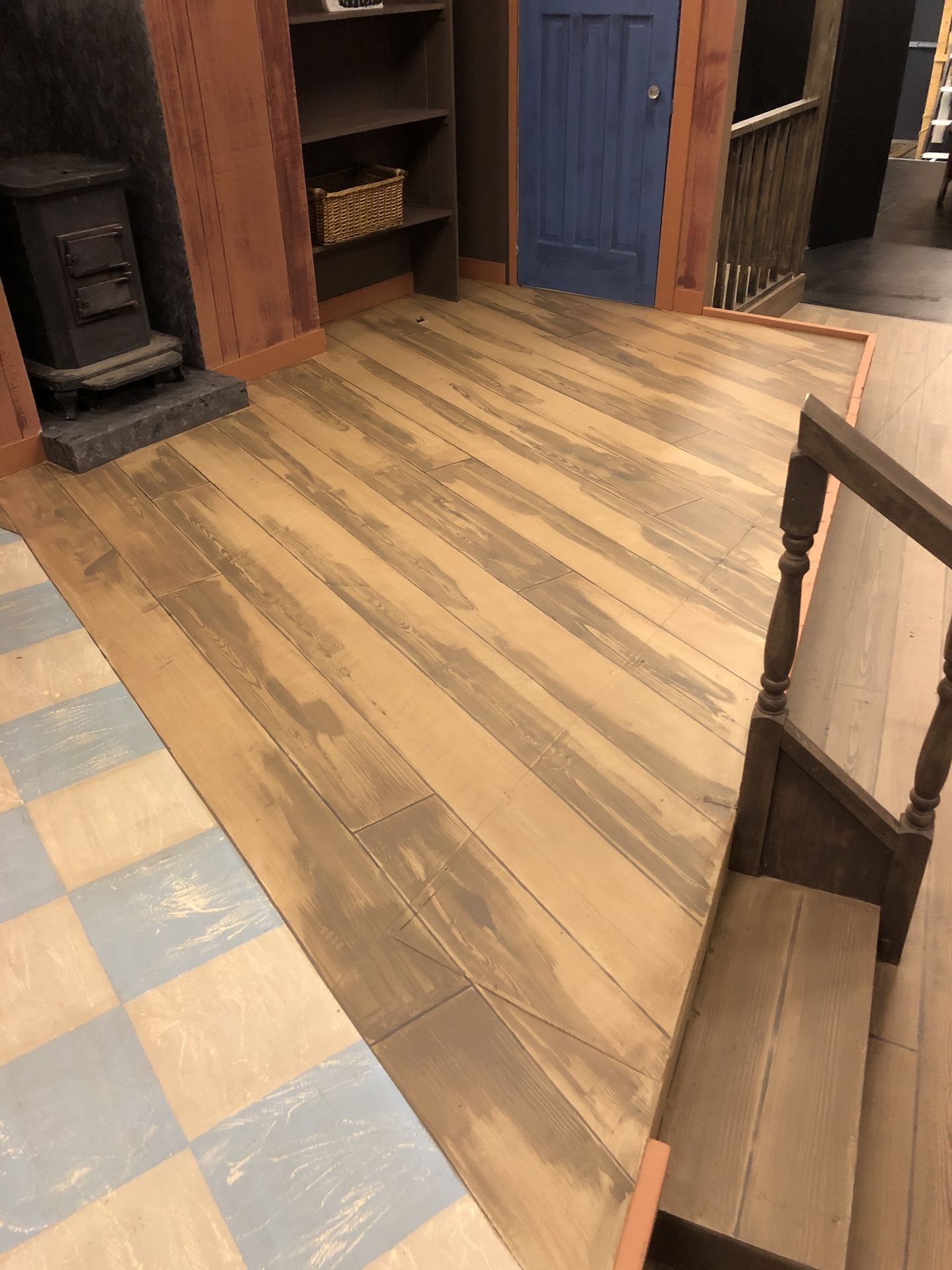
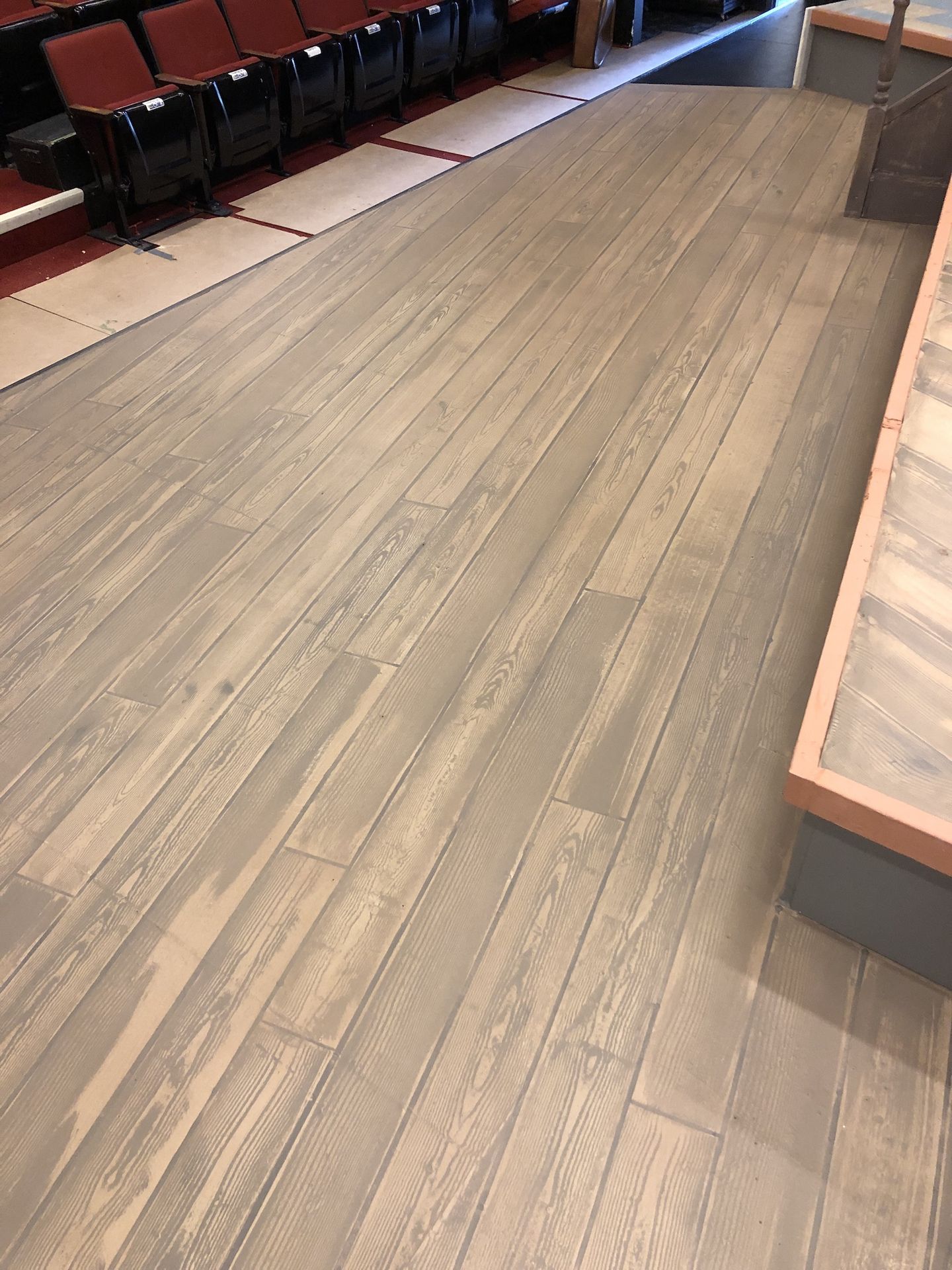
The floors were painted with a variety of faux finishes such as wood grain and linoleum.

The main sunporch area after a wood grain finish has been applied.

The kitchen had a retro linoleum painted using 2 colours for the squares, then a rag was used with white paint to create the texture. Finally, a tinted varnish was applied to give some distressing to the floor, but further distressing in the form of cracks and dirt would be added later.

A broad plank wood grain was painted on the floor of the main living area, then given a brown wash and a coloured varnish glaze to complete the effect.

The sunporch was painted to resemble narrow planks using brushes, combs and graining tools then given the same tinted varnish treatment as elsewhere.

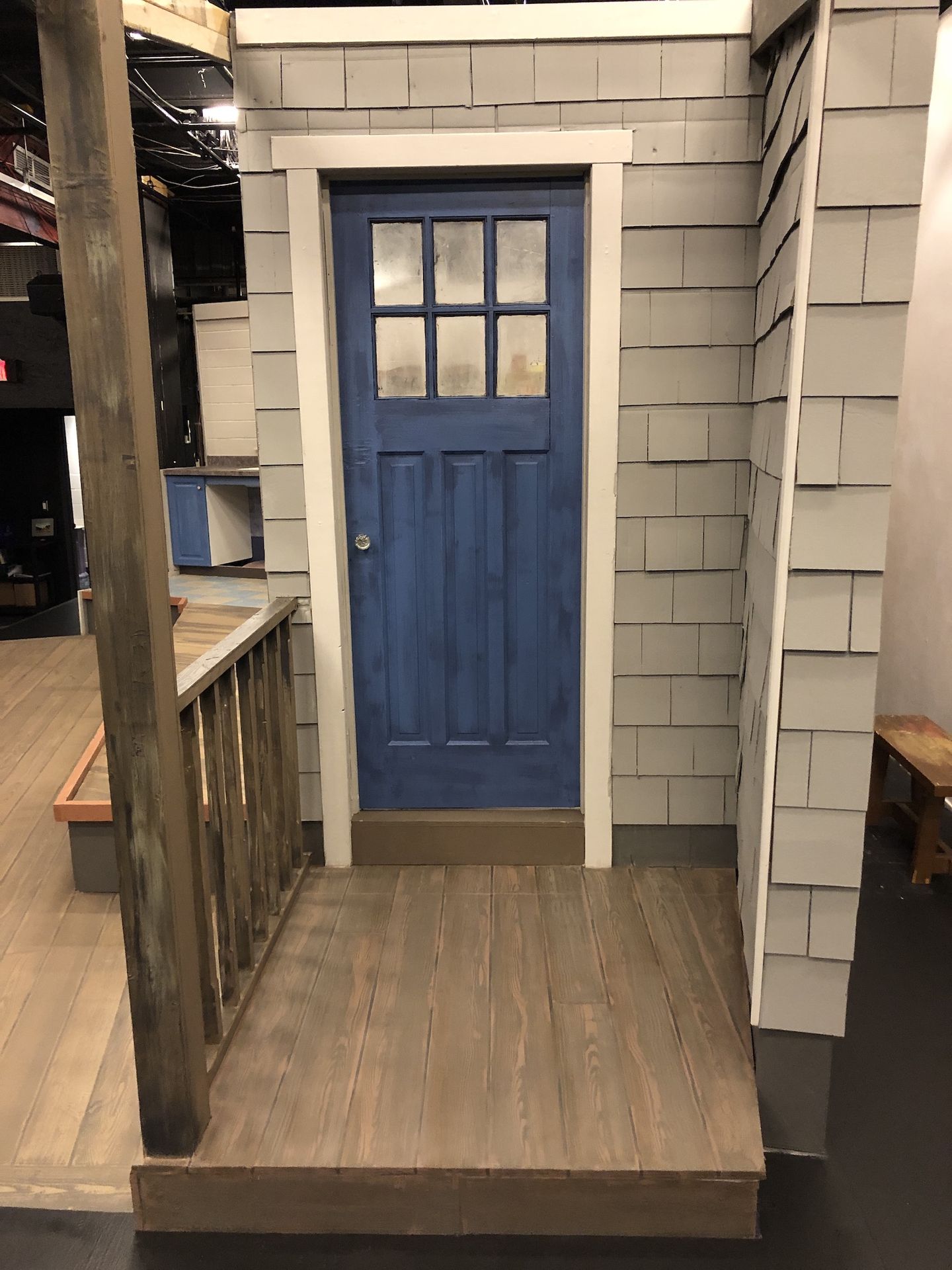
The door was distressed with darker tones and the porch was painted to resemble deck boards with a grey wash. The cedar shakes on the wall were given a treatment of dark and light greys to enhance the texture.

Set Dressing

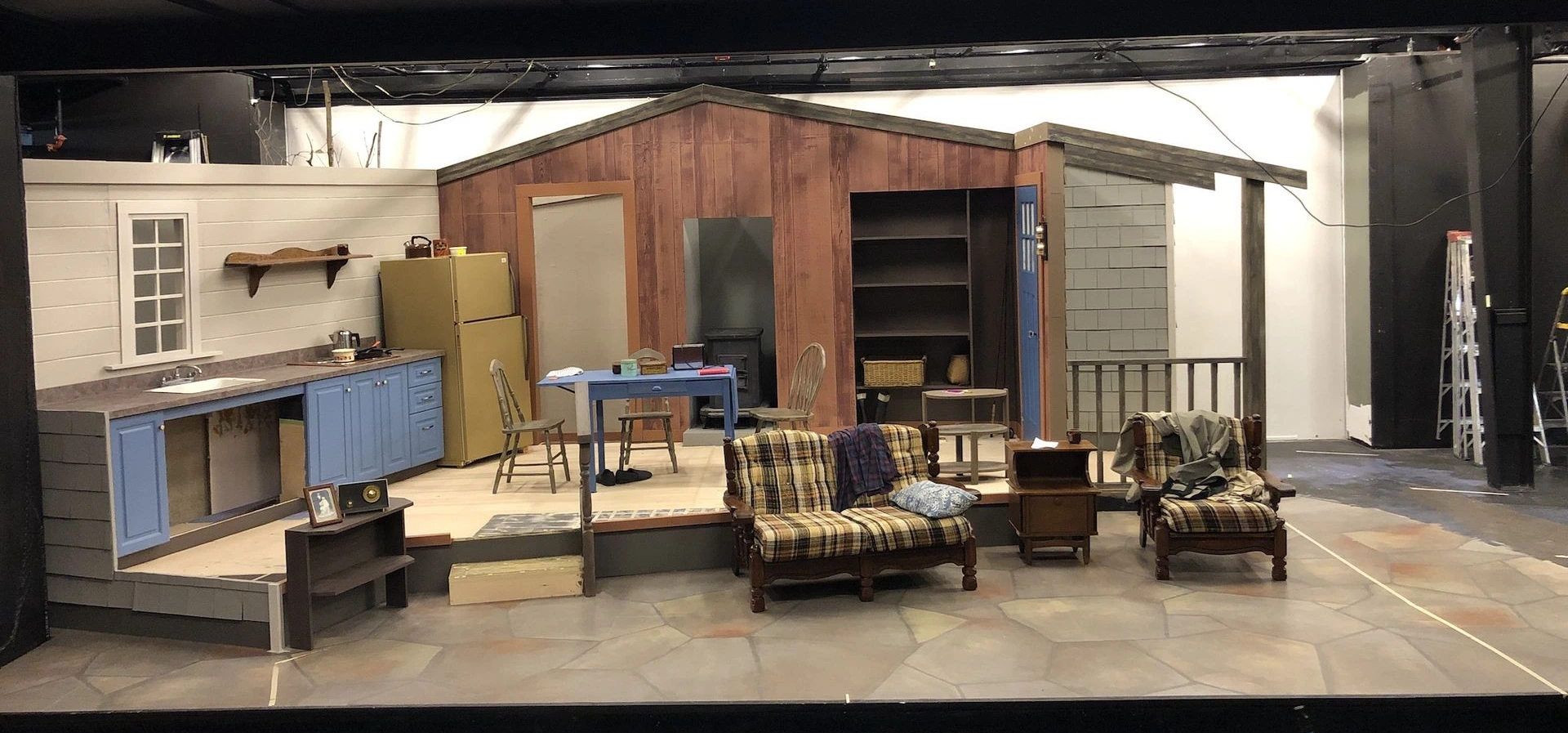
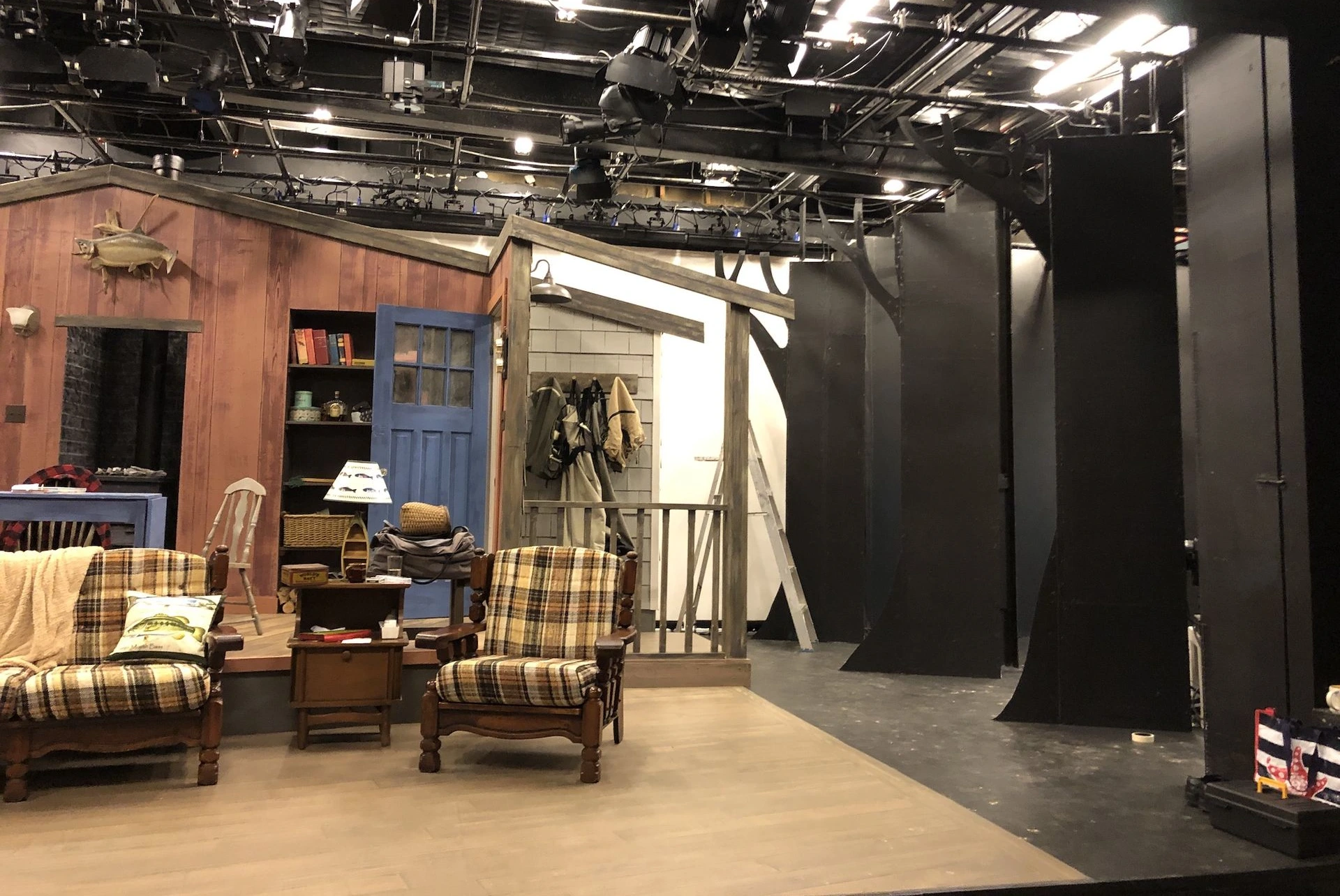
Once painted, the set was dressed with all of the furnishings and decoration required to bring it to life

The cabin is situated in the woods, which were represented by narrow flats with tree branches cut from Masonite and attached. Masking was used to hide the wings.

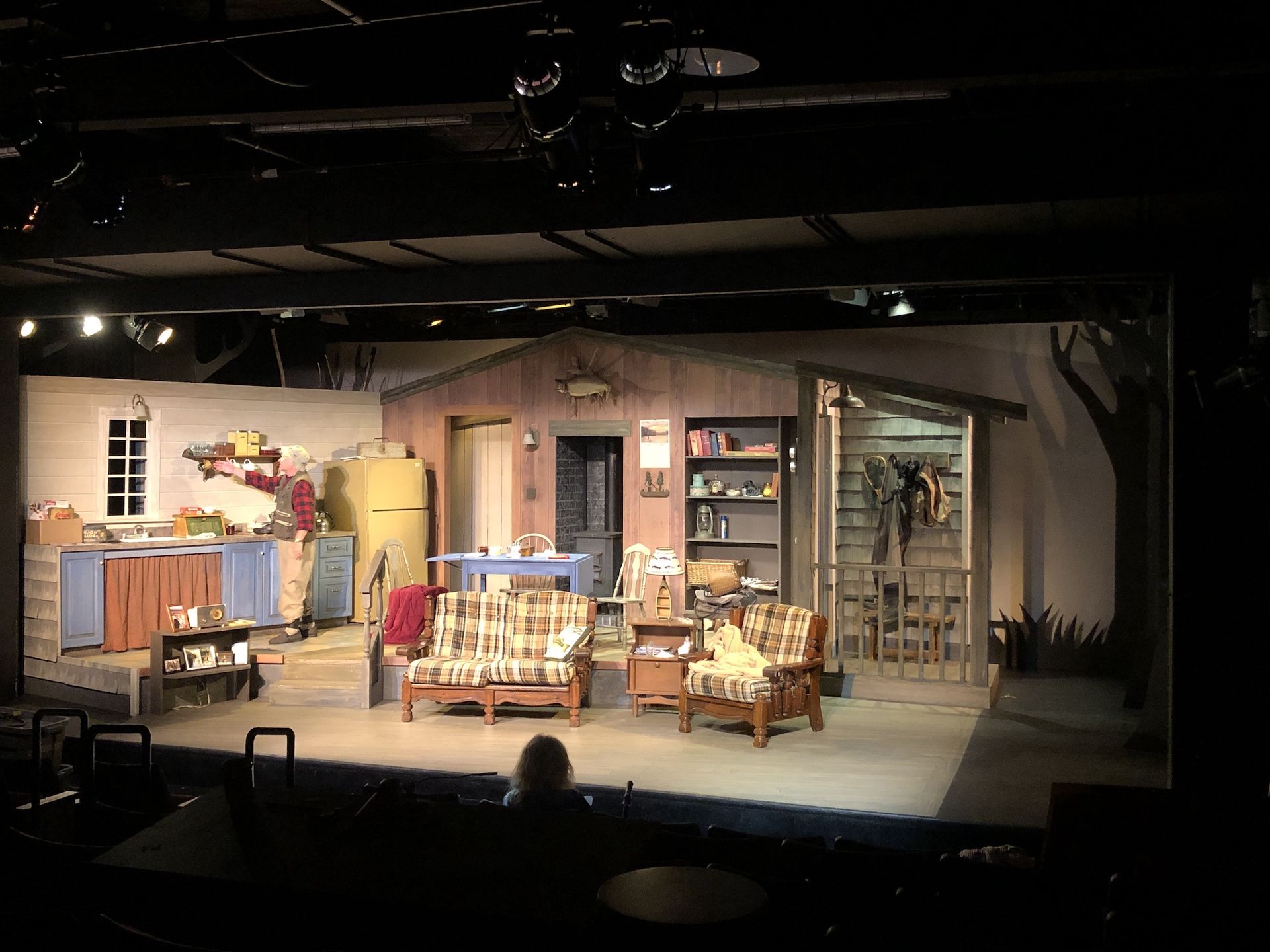
The dressed set during lighting level set.

Rehearsals and Tech


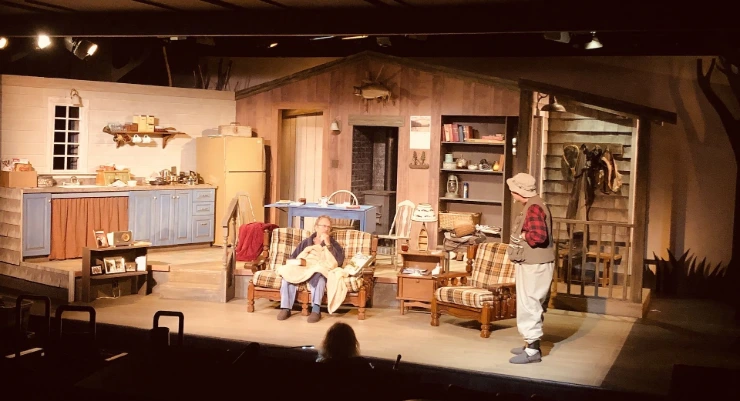
A shot from rehearsals, showing the practicals in place (wall sconces and lamps).

Another rehearsal shot. Distressing has been added to the kitchen, around the light switches, the fridge, etc. as “high touch” areas that would naturally become dirty over time.

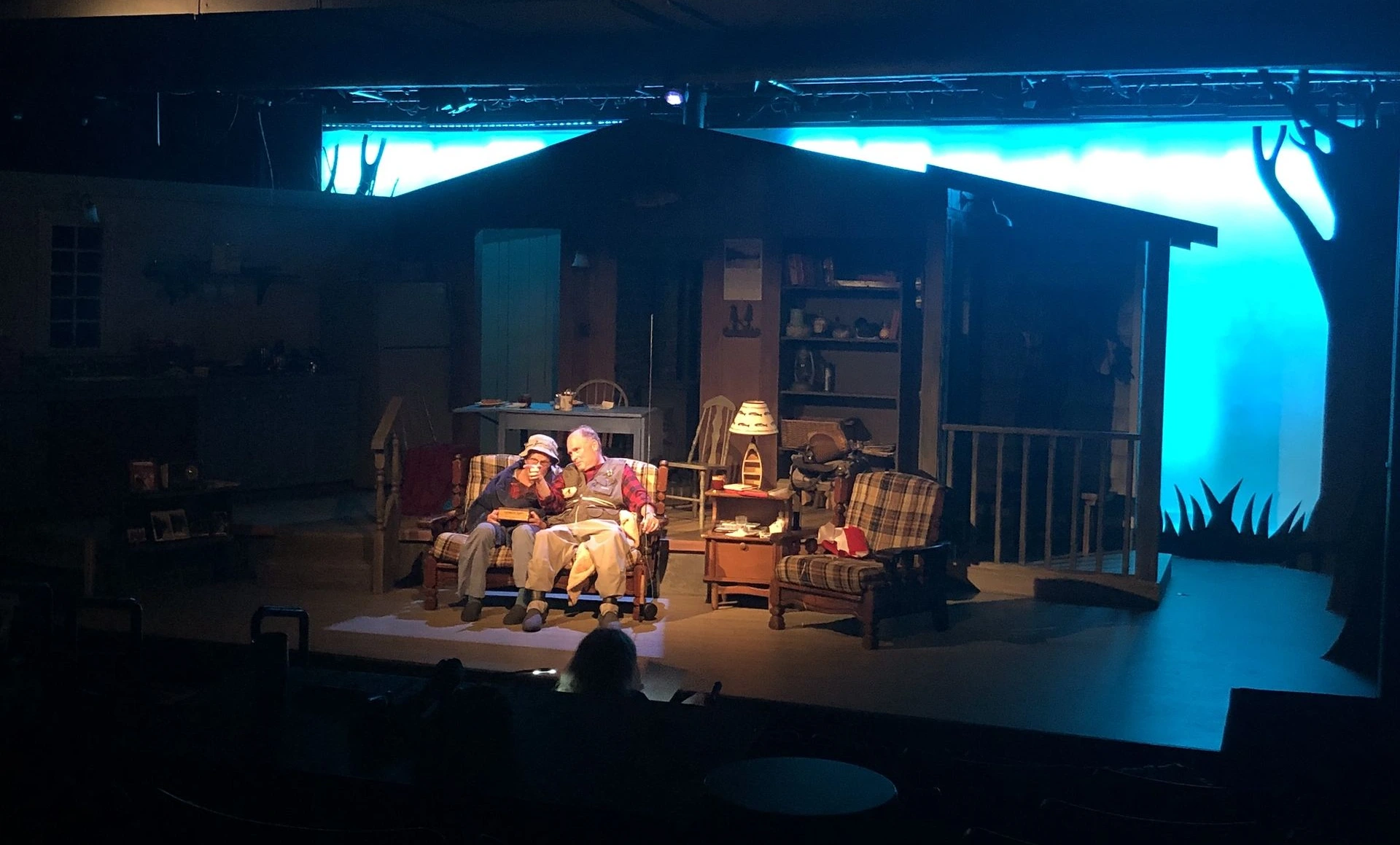
During some sequences of the play, LED lighting is used to illuminate the cyc at the back of the stage. A black border was added at the top of the cyc to conceal the lighting fixtures.

Set Complete


The set in pre-show mode before the member’s preview night show.

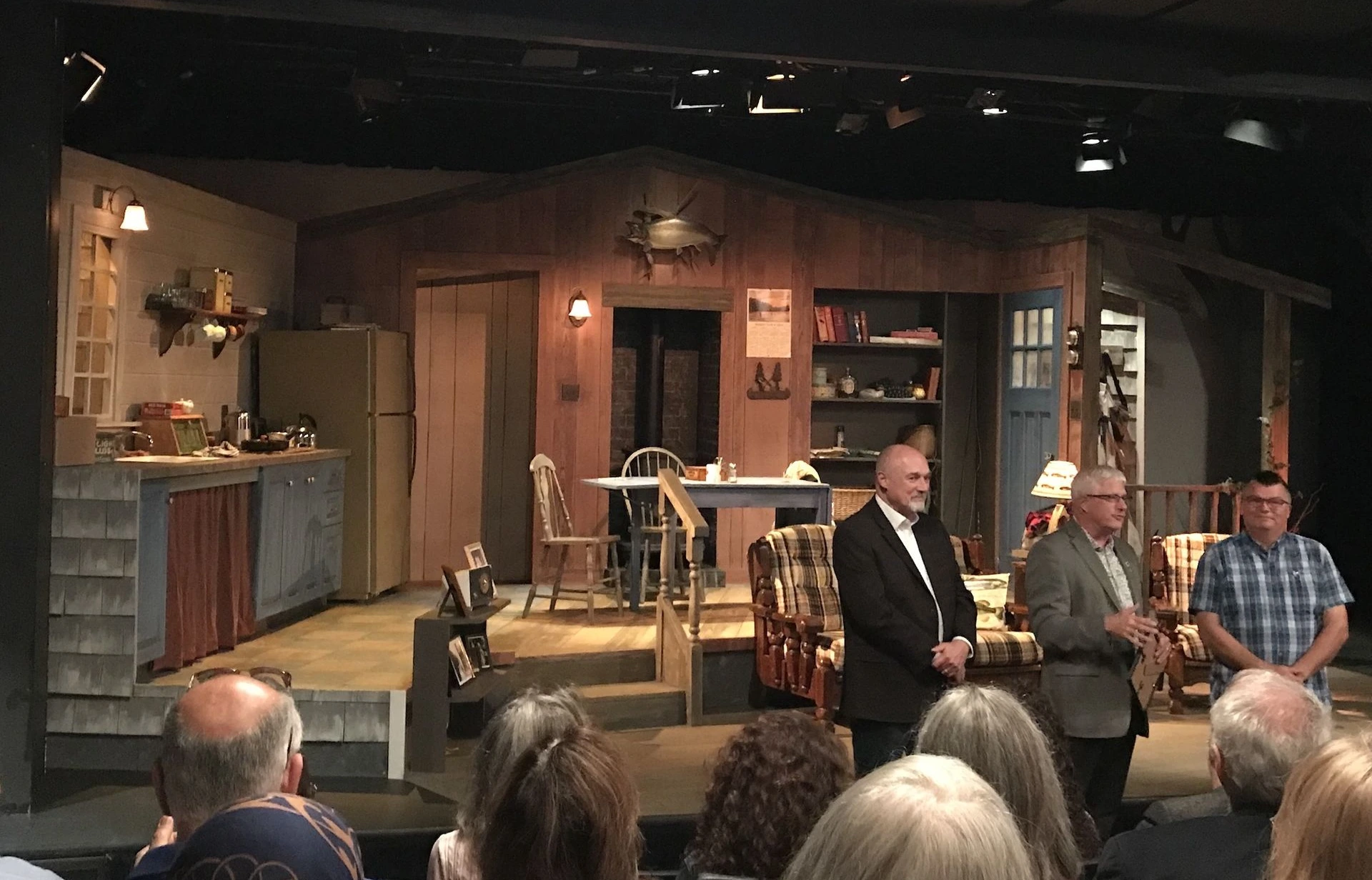
The opening night show, attended by (from left to right) Scott Thompson (Richmond Hill local councillor), David West (mayor of Richmond Hill) and Wayne Milliner (Curtain Club President).

Show Credits

Creative Team:

  • Director: Joan Burrows
  • Producer: Wayne Milliner
  • Stage managers: Phyllis Anderson, Lynda Muir
  • Set Designer: Matt Hall
  • Lighting Designers: Mary Jane Boon, David Buffham
  • Costume Designer: Amanda Eason
  • Sound Designer: Fabian Levy-Hara
  • Properties Coordinators: Alexandra Christofides, Deanna Rose

Cast:

  • Wes: Robert Ball
  • Don: David Henderson